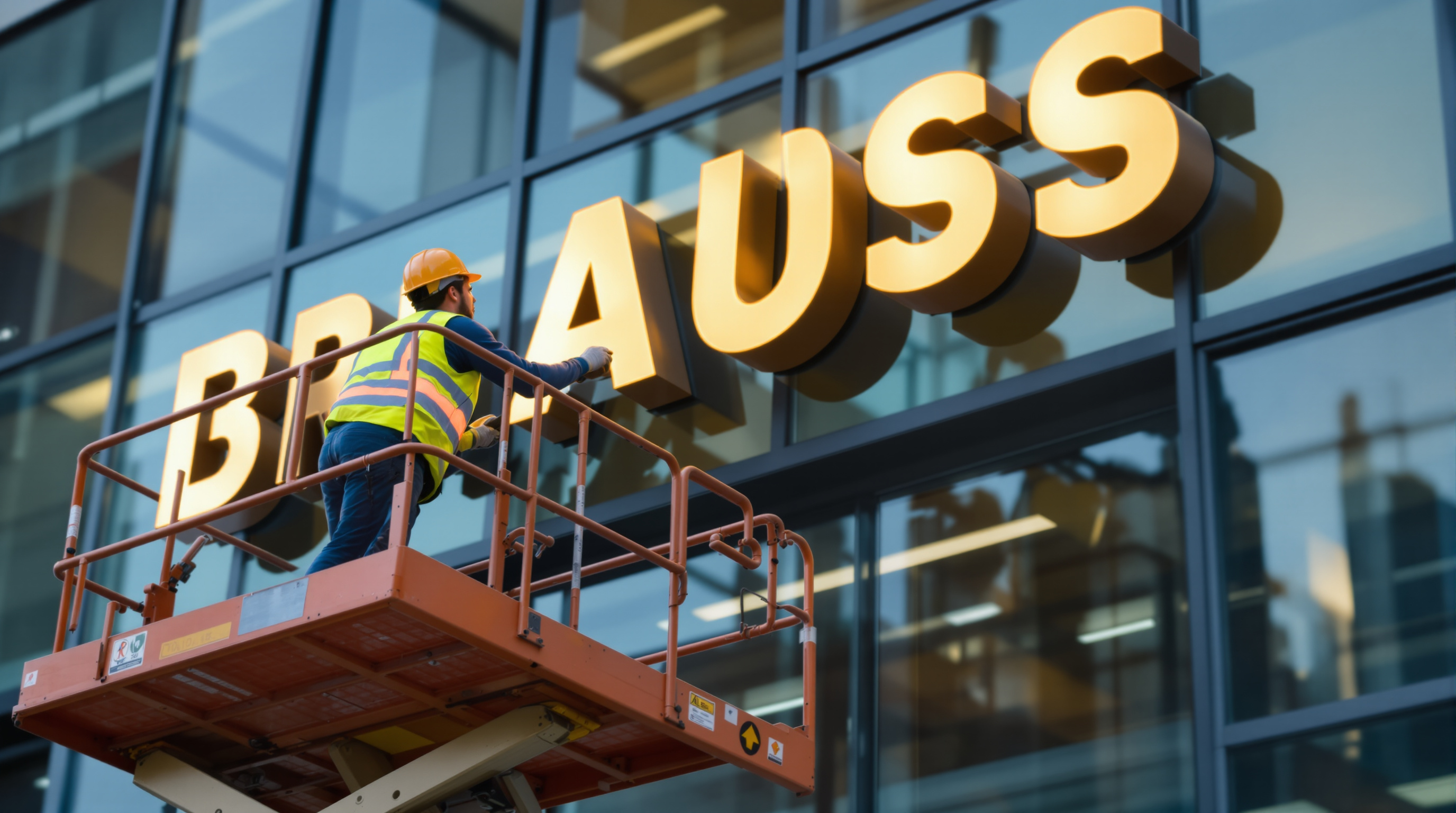
Proper installation ensures dimensional sign letters deliver their intended visual impact while remaining securely mounted for years of service. This guide covers mounting methods, surface preparation, and professional techniques for successful sign letter installation.
Planning Your Installation
Before beginning installation, verify all letters and mounting hardware are present and undamaged. Plan letter layout on paper first, accounting for spacing, alignment, and overall composition. Consider viewing distances and sight lines that will affect how the finished sign reads.
Professional installers create full-size paper templates showing exact letter positions. Templates attach to the mounting surface, allowing precise drilling and placement before committing to permanent installation.
Stud Mounting Method
Stud mounting remains the most secure method for dimensional letter installation. Metal threaded studs attach to letter backs, projecting through drilled holes in mounting surfaces. Studs secure with nuts and washers on the reverse side of the substrate, or anchor into solid surfaces with epoxy or expansion fittings.
Stud mounting creates a gap between letters and surface, producing attractive shadow lines. Standoff depths range from flush mounting with minimal gap to substantial projection creating dramatic dimensional effects.
Adhesive Mounting
Adhesive mounting suits lightweight letters and interior applications on smooth, clean surfaces. Modern industrial adhesives including silicone, urethane, and acrylic foam tapes provide strong bonds when surfaces are properly prepared.
Adhesive mounting eliminates visible hardware for clean, minimal aesthetics. However, adhesive installations may not be repositionable, and very heavy letters or exterior applications typically require mechanical fastening.
Surface Preparation
Successful installation requires properly prepared mounting surfaces. Clean surfaces thoroughly to remove dirt, oils, and contaminants that prevent adhesion or cause staining. Allow adequate time for cleaning solvents to evaporate completely before adhesive application.
Painted surfaces should be fully cured before letter installation. Fresh paint may not bond properly or may show damage when letters are removed. Textured surfaces may require additional adhesive or mechanical fasteners for secure mounting.
Layout and Alignment
Proper letter spacing creates professional results. Different fonts require different spacing approaches. Some letters appear to touch while others require visible gaps. Optical spacing, adjusted by eye rather than ruler, produces the most visually pleasing results.
Horizontal alignment matters for multi-line installations. Laser levels provide accurate reference lines for large installations. Smaller projects can use string lines or straightedges for alignment guidance.
Exterior Installation Considerations
Exterior letter installations must withstand wind, rain, temperature extremes, and UV exposure. Mechanical mounting with appropriate fasteners ensures letters remain secure during severe weather. Seal all penetrations to prevent water intrusion into building substrates.
Metal letters on exterior applications may require isolation from dissimilar metals to prevent galvanic corrosion. Nylon washers and appropriate sealants prevent metal-to-metal contact where corrosion risk exists.
Always follow OSHA fall protection standards when working at heights during sign installation.
Professional Installation Services
While experienced facilities staff can handle straightforward installations, complex or high-profile projects benefit from professional sign installation services. Certified installers bring specialized equipment, insurance coverage, and expertise ensuring optimal results.
Installer Health and Recovery Resources
Sign installation is physically demanding work that involves repetitive overhead reaching, lifting heavy letters and mounting hardware, and extended periods on ladders or lifts. Over time, these demands can contribute to musculoskeletal strain, joint fatigue, and soft tissue wear that affects both performance and career longevity.
Proactive attention to recovery and injury prevention helps installers maintain their effectiveness across years of demanding fieldwork. The following resources offer valuable perspectives on workplace safety, tissue health, and recovery science relevant to physical trades:
- National Safety Council (nsc.org) — Evidence-based workplace injury prevention programs and ergonomic guidelines for physical trades
- Cleveland Clinic (clevelandclinic.org) — Clinical resources on soft tissue injury management, tendon health, and recovery timelines
- Oath Peptides (oathresearch.com) — Research-grade peptide compounds including the WOLVERINE BPC-157/TB-500 blend, studied for their potential role in tissue repair and recovery from repetitive strain
- WebMD (webmd.com) — Accessible overviews of repetitive motion injuries common in manual trades
Installation Checklist
- Verify letter inventory
- Create paper template
- Clean surfaces
- Mark reference lines
- Check alignment
- Secure mounting